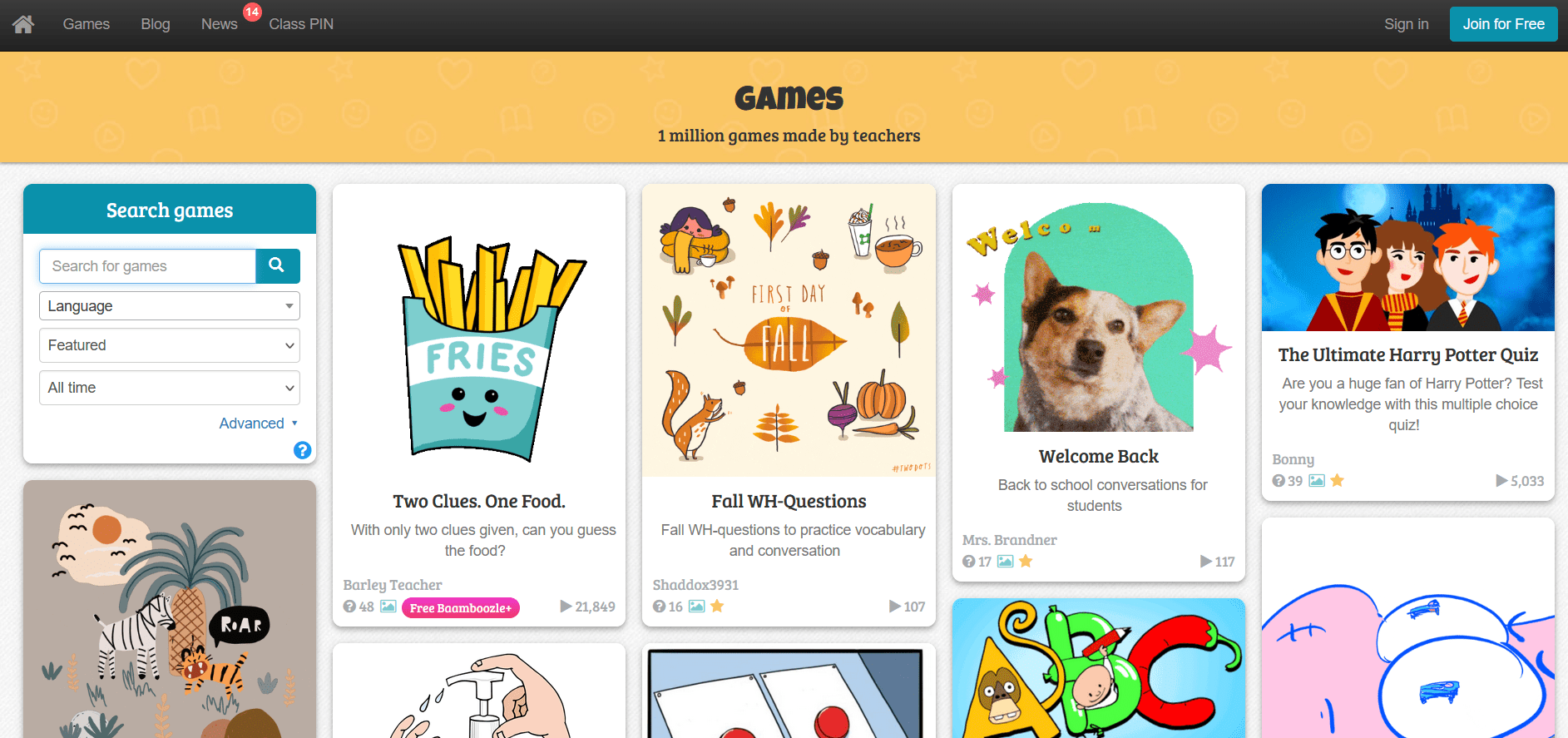
Don’t be bamboozled by baamboozle.com, but it is a really good alternative for kahoot. The nice thing about it is that unlike with kahoot.com, the students don’t need a mobile device.
What is it?
It’s an online website that lets you play vocabulary or grammar games with your English students. You can also use it for any other subject, French, Maths, Biology,… so it’s ideal for any teacher or STEM teaching.
How does it work?
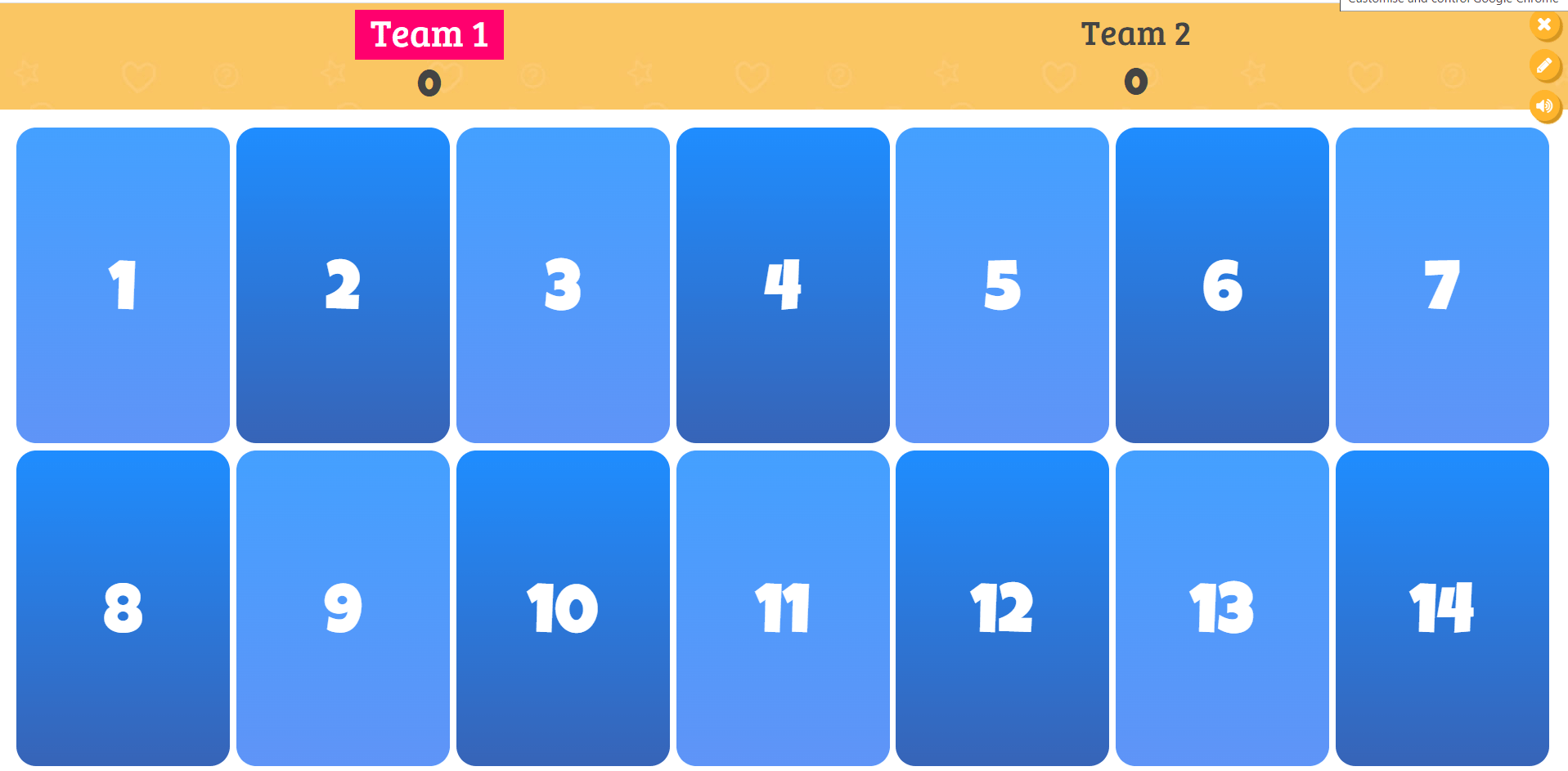
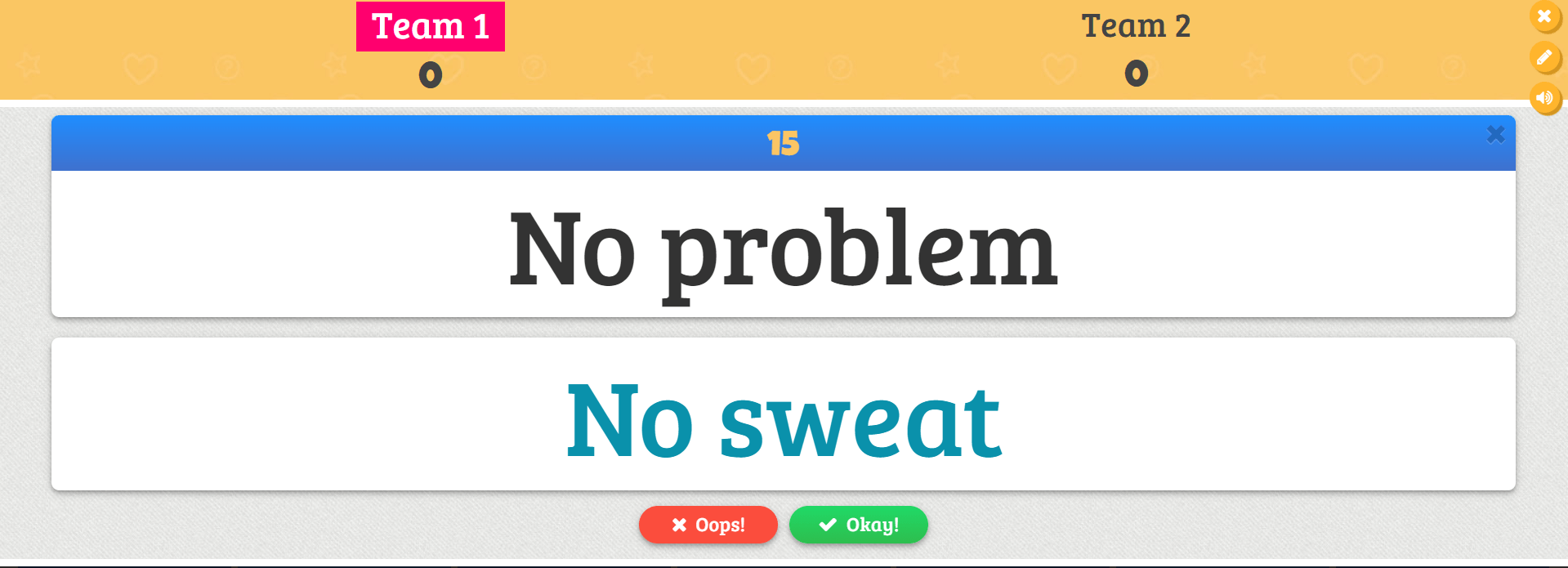
You create a free account, as always there is a paid option, but the free one is enough. You look for some vocabulary or grammar you want to reviewor easily create your own baamboozle game. I do have to say that the search function is not really amazing and it is rather challenging to find what you need!In this sense Kahoot.com is much much better. So, I hope in the future they will sort that out. Once you have what you need you start the game and project it on the board. Unlike kahoot this is a team game, so you need to put the students in teams. The students select a number and a question appears, which they need to answer. There is a multiple choice option, but that is for paid accounts. The students answer and you check if they have the correct answer. When correct you award them the points. This means it doesn’t need to 100% correct and you can still give points for a good answer. As always the team with the most points wins. There is a twist though, you can play the classic version, which gives random extra points or takes points away if you select a number without a question. This means that not always the smartest team wins. The students hate it, but still want to play with the function to add some extra suspense.
Why use it?
Because it is fun to play games with students without them realising they are learning. Plus it is a team effort and something different than always kahoot.com. Finally, like I said before you can use it for anything.
Watch out for!
You do need a stable internet connection in the class
You need a computer and a projector to show the baamboozles
The students do not need a mobile device!
You need teams
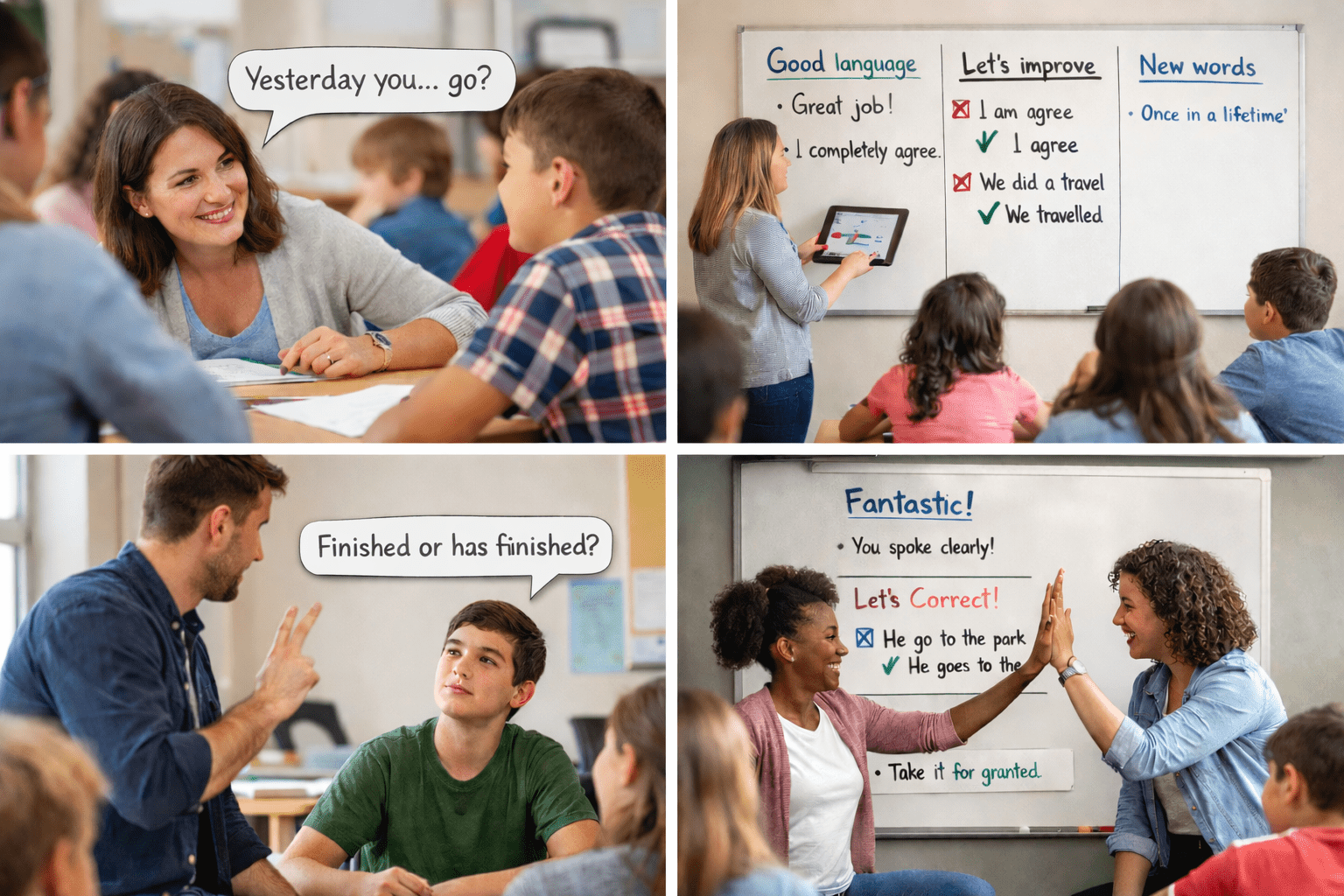
How I have used it?
to teach new vocabulary
as filler to keep the students busy when we still have some more time left
as a warmer to get the students thinking about the topic
to review vocabulary they have already seen
have a look at grammar and do grammar gap fills where they select the possible answers